+51 984009025 +51 984009025
The Sacred Valley of the Incas—also known as the Urubamba Valley—is a famous Andean valley located between the Urubamba River and the Vilcanota Mountain Range, in the Cusco region of Peru. This unique landscape is surrounded by snow-capped peaks, canyons, hills, fertile plains, archaeological sites, and traditional Andean towns that make it one of the most important cultural areas of South America.
During Inca times, the Sacred Valley was highly valued for its mild climate, strategic location, and fertile soil. It supplied agricultural products for the Inca elite, and its green meadows were chosen as resting and ceremonial areas for the nobility. Today, it remains a key part of any trip to Cusco and Machu Picchu.
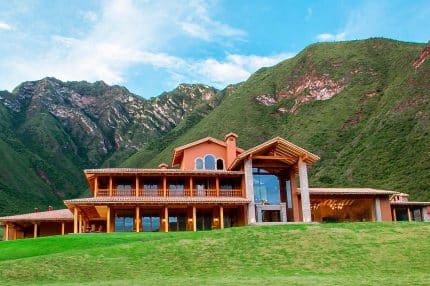
Currently, the Sacred Valley is one of the most visited destinations in Cusco and Peru. It is the main gateway to Machu Picchu and an ideal place to rest and acclimatize before continuing the journey. Many travelers choose to stay here because some of the best hotels in the Sacred Valley and Peru are located along this scenic route.
The Sacred Valley of the Incas is located along the banks of the Urubamba River (also called the Vilcanota River), about 52 km northeast of the city of Cusco. The main towns in the valley include Pisac, Calca, Yucay, Urubamba, and Ollantaytambo. The valley extends well beyond these points and can be explored partially or as a complete circuit.
One of the most appealing features of the Sacred Valley is its temperate and pleasant climate. Average temperatures generally range between 4 °C and 23 °C, depending on the season and time of day. Because of its lower altitude compared to Cusco, the valley is an excellent place to acclimatize before visiting higher-altitude destinations.
While Cusco sits at 3,399 meters above sea level (masl), the Sacred Valley lies at a lower elevation, averaging around 2,800–2,900 masl. Below are the approximate elevations of the main towns:
The Sacred Valley offers a wide range of activities that combine history, culture, gastronomy, and outdoor adventure. During your visit, you can:
The Sacred Valley is surrounded by diverse natural and cultural attractions, including:
Among these, the following are the most visited sites in the Sacred Valley:
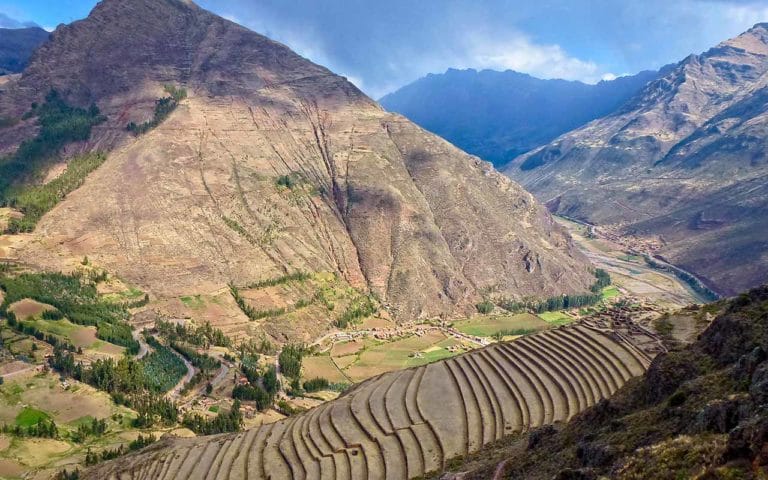
The Pisac Archaeological Complex is located about 41 km northeast of Cusco and just above the town of Pisac. It is one of the most important and impressive sites in the Sacred Valley. Historians suggest it served both ceremonial and strategic purposes, controlling access routes between the Andes and the jungle.
The Pisac Crafts Market, located in the town’s main square, is one of the best places in the region to buy traditional Andean textiles and handicrafts. Although it is open daily, Sundays offer the most traditional atmosphere.
The Fortress of Ollantaytambo is a remarkable Inca site and a living town where original Inca streets and canals are still in use. It played an important military, religious, and administrative role and is also the main train gateway to Machu Picchu.
Awanacancha is a living textile center where visitors can observe traditional weaving techniques and see alpacas, llamas, and vicuñas. It is also a popular stop to purchase high-quality alpaca and baby alpaca products.
Moray is famous for its circular terraces, believed to have been an Inca agricultural research center. Each level creates a different microclimate, allowing the Incas to experiment with crops adapted to various environments.
Chinchero combines Inca and colonial history. The colonial church was built over an Inca palace, and the site is known for its large plaza, terraces, and traditional Sunday market.
The Salt Mines of Maras consist of thousands of salt ponds that have been worked since pre-Inca times. They form one of the most photogenic landscapes in the Sacred Valley and are still managed by local families.
Uchuy Qosqo, meaning “Little Cusco,” is an Inca site located high above the valley near Lamay. Due to its remote access, it is less visited but offers spectacular views of the Sacred Valley and surrounding mountains.
There are several ways to reach the Sacred Valley from Cusco, including public transportation to Pisac, Calca, or Urubamba; hiking routes such as the trail to Uchuy Qosqo; private transportation; or guided tours that cover the main attractions.
There are multiple options to explore the Sacred Valley through organized tours, either shared or private, all departing from Cusco:
Below you’ll find more related travel guides to help you plan your trip (the visual list will appear automatically).